SpinBlitz Casino: what the new social casino offers and how its economy works
SpinBlitz Casino represents a new generation of social gaming services that blend traditional slot-style entertainment with modern monetisation models. Unlike real-money gambling, this format focuses on virtual currencies, in-game progression, and community interaction. In 2026, interest in social casinos continues to grow, driven by mobile-first audiences and regulatory pressure on classic online casinos. This article explains how SpinBlitz operates, what players actually get, and how its internal economy is structured.
What makes SpinBlitz Casino different from traditional online casinos
The key distinction lies in the absence of direct real-money wagering. SpinBlitz uses a dual-currency model, typically combining free coins with premium tokens. Players can access games without deposits, while optional purchases enhance progression speed rather than guarantee winnings. This approach aligns with current regulatory trends in Europe and the UK, where social gaming is often treated differently from licensed gambling.
Another defining feature is the strong emphasis on gamification. SpinBlitz integrates daily missions, loyalty levels, timed events, and seasonal campaigns. These mechanics encourage long-term engagement rather than short sessions focused on financial outcomes. As a result, the experience resembles a hybrid between a casual mobile game and a slot environment.
Social elements also play a central role. Leaderboards, shared rewards, and community competitions create a sense of interaction that is often missing in classic casino environments. This shift reflects broader industry trends where retention is increasingly driven by user engagement rather than bonus offers.
Game selection and mechanics inside SpinBlitz
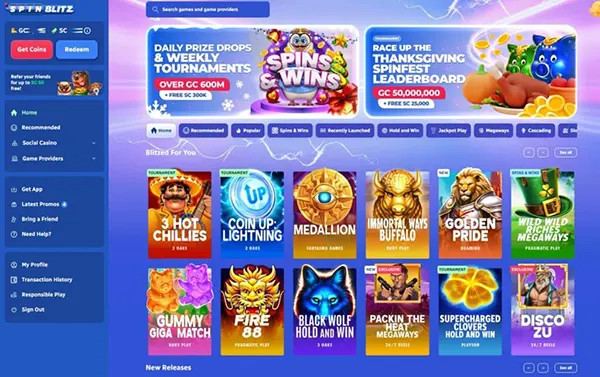
The game library in SpinBlitz is typically built around slot-style mechanics, including reels, paylines, and bonus rounds. However, outcomes are adjusted to support longer play sessions and smoother progression curves. Volatility tends to be moderated, ensuring players remain active rather than quickly losing access to gameplay.
In addition to slots, many social casinos introduce mini-games, tournaments, and time-limited challenges. These formats diversify the experience and reduce reliance on repetitive spinning mechanics. Players are rewarded not only for wins but also for activity, participation, and consistency.
Importantly, game design in SpinBlitz is optimised for mobile devices. Fast loading times, simplified controls, and short session loops reflect how users interact with apps in 2026. This design philosophy prioritises accessibility over complexity.
How the SpinBlitz in-game economy actually works
The economic system of SpinBlitz is built around virtual currencies that cannot be directly withdrawn as cash. The primary currency is usually distributed freely through login bonuses, achievements, and gameplay rewards. This ensures that users can continue playing without mandatory purchases.
The secondary currency, often purchased with real money, acts as a premium resource. It may unlock higher-stakes gameplay, exclusive events, or faster progression. However, it does not typically convert into real-world winnings, which keeps the model within social gaming regulations.
A critical element of the economy is balance. Developers carefully control how quickly players earn and spend resources. If progression feels too slow, users disengage; if it is too fast, monetisation weakens. Modern analytics tools allow operators like SpinBlitz to adjust these parameters in real time.
Monetisation strategy and player spending behaviour
SpinBlitz relies on microtransactions rather than traditional deposits. Players purchase bundles of premium currency, often accompanied by limited-time offers or discounts. These offers are personalised using behavioural data, a common practice in mobile gaming.
Spending patterns in social casinos differ from gambling platforms. A small percentage of users, often referred to as “whales”, generate the majority of revenue. At the same time, most players remain non-paying users who contribute to the ecosystem through activity and engagement.
Transparency has become increasingly important. In 2026, regulators and app stores require clearer communication about the non-cash nature of virtual currencies. SpinBlitz and similar services must avoid misleading players about potential financial outcomes.
Advantages and limitations of the SpinBlitz model
One of the main advantages is accessibility. Players can participate without financial risk, making the service appealing to a wider audience. This is particularly relevant in regions with strict gambling laws or where users prefer low-commitment entertainment.
Another benefit is the reduced regulatory burden compared to licensed casinos. While still subject to consumer protection rules, social casinos operate with fewer restrictions, allowing faster innovation and experimentation with new features.
However, there are also limitations. The absence of real winnings may reduce long-term appeal for users seeking financial outcomes. Additionally, the reliance on microtransactions can raise concerns about spending habits, especially when progression is tied to purchases.
Future outlook for social casinos like SpinBlitz
The social casino segment is expected to expand further, particularly on mobile platforms. Integration with social networks, streaming services, and influencer-driven events is already shaping how these products evolve. SpinBlitz fits into this trend by focusing on community-driven engagement.
Technological developments such as AI-driven personalisation and real-time analytics will continue to refine user experience. Players will see more tailored offers, adaptive difficulty, and dynamic reward systems designed to maximise retention.
At the same time, regulatory scrutiny is likely to increase. Authorities are paying closer attention to how virtual currencies are marketed and used. For SpinBlitz, maintaining transparency and fair design will be essential for long-term sustainability.